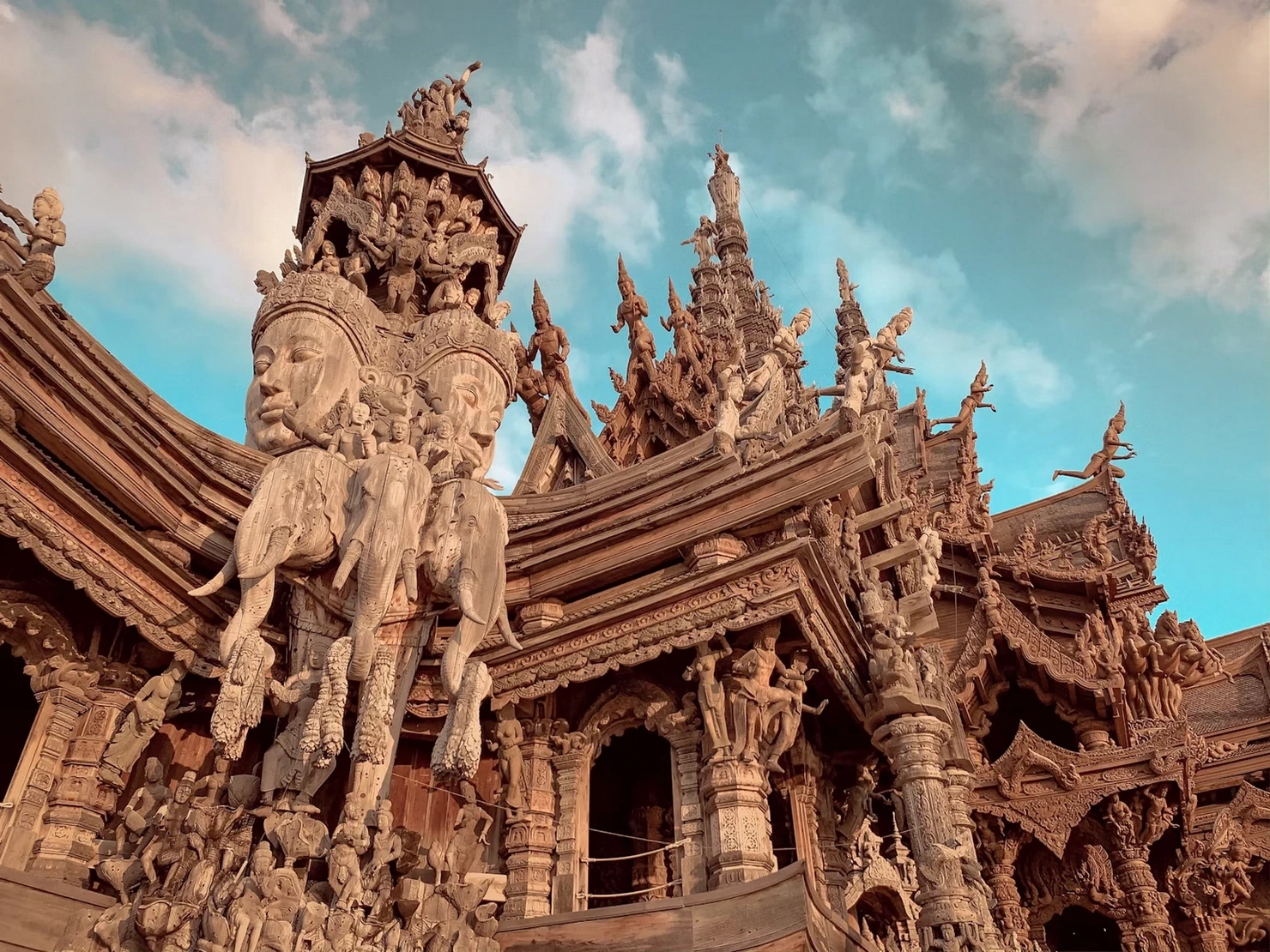
For those captivated by the intricate beauty of traditional craftsmanship and the profound narratives embedded in cultural heritage, the Sanctuary of Truth (Prasat Satchatham) in Pattaya, Thailand, offers an unparalleled experience. This awe-inspiring, all-wood edifice is not merely a tourist attraction; it’s a monumental philosophical statement, an ongoing artistic endeavor, and a living testament to the enduring wisdom of Eastern thought. A visit here is a journey into the heart of Thai, Khmer, Chinese, and Indian art and architecture, promising a rich cultural immersion into the world of wood craft.
The Vision: More Than Just a Structure, a Philosophy in the Making
The genesis of the Sanctuary of Truth lies in the visionary mind of Thai businessman Lek Viriyaphant. Driven by a deep appreciation for the ancient wisdom of the East, he conceived of a structure that would transcend conventional religious buildings. His aim was to create a “castle of truth” (Prasat Satchatham) that would remind humanity of its connection to the universe, the importance of virtue, and the eternal cycle of life. He believed that understanding ancient philosophies could lead to a more harmonious society.
Construction began in 1981 and continues to this day, a deliberate choice reflecting the philosophy that “learning and creation are endless.” This continuous evolution, with artisans meticulously carving and restoring sections, symbolizes the dynamic nature of human endeavor and the ongoing pursuit of knowledge and enlightenment. It’s a structure that breathes, grows, and repairs itself, echoing the impermanence of life and the constant need for nurturing and renewal. This commitment to perpetual craftsmanship ensures that the Sanctuary remains a living monument, constantly being perfected and renewed, and is a key part of its philosophical foundation.
Architectural Grandeur: A Masterpiece in Wood
The first impression of the Sanctuary of Truth is its sheer scale and breathtaking wooden construction. Soaring to a height of 105 meters (approximately 345 feet) and covering an impressive 2 rai (about 0.79 acres) of land, it stands as a testament to ancient building techniques. What sets it apart is the exclusive use of wood, meticulously joined together without a single metal nail. This commitment to ancient wood craft is a remarkable feat of engineering and artistry. Wooden pins, wedges, slots, and grooves meticulously interlock, holding the massive structure together. Traditional techniques like tongue and groove, butt joints, dovetails, and sapped spurs are expertly employed, showcasing the ingenuity of Thai artisans and demonstrating building methods that predate modern construction. This “nail-free” construction method is not only a nod to historical building practices but also a deliberate choice by Lek Viriyaphant to illustrate the impermanence of life, as wood, unlike metal, is susceptible to the elements and requires continuous maintenance.
The architectural style is a captivating hybrid, primarily drawing from the grandeur of the Ayutthaya Kingdom era of Thai architecture, with notable influences from Khmer, Chinese, and Indian temple designs. The structure features four distinct gopuras (ornate gatehouses), each symbolizing different aspects of Eastern philosophy and mythology. The central spire, a towering expression of spiritual aspiration, anchors the entire composition, creating a sense of balance and harmony. The deliberate use of various types of hardwoods, including Mai Deang (Xylia xylocarpa), Mai Takien, Mai Panchaat, and teak, adds to the visual richness, with different textures and tones that shift with the light. Takien wood, used for the main post, is especially significant for its longevity, estimated to last for 600 years.
Artistry in Wood: The Language of Carvings and Craftsmanship Details
Every surface of the Sanctuary of Truth is a canvas for an astonishing array of hand-carved wooden sculptures. These are not mere decorations; they are intricate narratives, philosophical treatises, and symbolic representations brought to life in wood. The carvings are imbued with deep meaning, drawing from Hindu and Buddhist deities, mythological creatures, celestial beings, and ancient philosophical concepts. The level of detail in this wood craft is astounding, with layers upon layers of figures and motifs telling stories of creation, wisdom, and the human condition.
The Sanctuary is broadly divided into four main halls, each with its own thematic focus, conveyed through the carvings:
- Northern Hall (Wisdom and Emancipation): This hall emphasizes Buddhist concepts of wisdom and the path to spiritual liberation. Carvings here often depict figures like Guanyin and illustrate the teachings of Confucianism and Taoism, suggesting that good deeds lead to spiritual enlightenment and ultimately, Nirvana.
- Southern Hall (Familial Bonds and Creation): Dedicated to the profound importance of parental love and family, this hall features scenes that celebrate the unconditional care within a family unit. It also incorporates astronomical themes, showcasing the sun, moon, and stars as fundamental creators of life and influencers of human destiny, highlighting the cyclical nature of existence.
- Western Hall (Elements and the Divine): This hall explores the classical elements of earth, water, wind, and fire. It showcases sculptures of the Hindu Trinity – Brahma (air), Vishnu (water), and Shiva (fire and earth) – symbolizing the divine forces that govern these elements and the universe.
- Eastern Hall (Philosophy and Guidance): This section centers on the role of wise philosophers, religious teachings, and ancient scriptures in guiding humanity. Carvings here often emphasize the pursuit of knowledge, truth, and moral conduct as essential for a virtuous life.
Beyond the internal halls, the exterior, particularly the rooftops, is equally rich in symbolism. The four main rooftops feature carvings of women carrying objects that represent specific virtues:
- A woman with an elder and a child (Southern Rooftop): Symbolizing filial piety and the importance of family care.
- A woman carrying a lotus (Northern Rooftop): Representing purity and adherence to religious teachings.
- A lady with a pigeon and rice stalks (Western Rooftop): Signifying peace, fertility, and prosperity gained through merit and good deeds.
- A woman holding scripture (Eastern Rooftop): Advocating for guidance from wise philosophers and ancient prophets.
At the very apex of the central spire, a carved entity on a horse unites these philosophies, symbolizing a journey towards enlightenment and universal peace. The intricate details of dragons, elephants, celestial dancers, and various mythological figures throughout the structure create a sense of wonder and invite prolonged contemplation. The ongoing work of the artisans, often visible on-site, provides a fascinating glimpse into the laborious and skilled process of wood craft, underscoring the dedication to preserving these ancient traditions.
Cultural Significance and the Tourist Experience
The Sanctuary of Truth is more than just a magnificent piece of architecture; it is a profound cultural landmark that celebrates Thailand’s rich heritage of Thai crafts and its deep spiritual roots. It acts as a philosophical museum, transcending specific religious doctrines to promote universal truths and values relevant to all humanity.
A visit to Prasat Satchatham is an immersive cultural experience. Upon arrival, visitors are typically provided with safety helmets due to the ongoing construction, a tangible reminder of the living, evolving nature of the monument. Guided tours, available in multiple languages including English, Thai, Chinese, Russian, Japanese, and Korean, are highly recommended as they provide invaluable insights into the history, philosophy, and intricate details of the carvings. The guides skillfully explain the symbolic meanings behind each section, enriching the visitor’s understanding and encouraging introspection. Walking through the halls, visitors are encouraged to contemplate the depicted narratives and their relevance to human existence. The serene oceanfront setting further enhances the contemplative atmosphere.
Tourist Information and Details:
- Opening Hours: The Sanctuary of Truth is open daily from 8:00 AM to 6:00 PM for day tours. Night tours are available from 6:20 PM to 8:30 PM (confirm specific days, as some sources indicate Friday and Saturday only). Last entry for day tours is generally 4:30 PM.
- Admission Prices:
- Adults: 500 Baht (Day tour), 700 Baht (Night tour)
- Children (110-140 cm in height): 250 Baht (Day tour), 350 Baht (Night tour)
- Children (under 110 cm): Free
- Prices are subject to change. It’s always best to check the official website or a reputable ticket vendor for the most current information and to book in advance.
- Guided Tour Schedule: Tours in English and other languages are offered frequently throughout the day. For example, English tours typically run every hour or so from 9:10 AM to 5:00 PM. Specific timings can be confirmed upon arrival or on their official website. Leaflets are also available in many languages.
- Dress Code: As a culturally significant site, visitors are kindly requested to dress modestly. Shoulders and knees must be covered. Sarongs and shawls are available for rent at the entrance for a refundable deposit (e.g., 200 Baht) if needed.
- Accessibility: The site is largely walkable, but some areas involve stairs and uneven wooden surfaces. For those with mobility challenges, special pick-up and tour carriages are available from the viewpoint to the Sanctuary itself without an extra fee. There are also elevators inside the building and wheelchairs available free of charge, along with ramps for wheelchair access.
- Photography: Photography is generally allowed and encouraged, but drone photography and video recording inside the museum are usually prohibited without prior permission to protect the integrity of the artwork and the visitor experience.
- Location: The Sanctuary is located in the Naklua area of Pattaya, slightly north of the main tourist hub, on a picturesque piece of coastline overlooking the sea. It’s easily accessible by local baht buses (songthaews), taxis, or ride-sharing services from central Pattaya. It takes approximately 15-20 minutes by taxi from central Pattaya.
- Estimated Visit Time: Plan for at least 2 to 4 hours to fully explore the Sanctuary, take the guided tour (which lasts approximately 45-60 minutes), and allow time to appreciate the intricate details and perhaps engage in optional activities.
- Best Time to Visit: Morning or late afternoon are generally recommended for cooler weather and optimal lighting for photography. Visiting earlier in the day might also allow you to observe the artisans at work in their workshops before they finish for the day.
Optional Activities (may incur additional costs):
- Horse and Carriage Rides: A charming way to explore the expansive grounds surrounding the Sanctuary.
- Elephant Riding: Offers a unique perspective of the Sanctuary from a higher vantage point.
- Speedboat Rides: Provides panoramic views of the Sanctuary from the ocean, highlighting its dramatic coastal setting.
- Traditional Thai Dance Performances: Daily cultural shows add a lively dimension to the visit, showcasing another facet of Thai crafts and artistic expression.
- Wood Carving Workshops: A truly unique opportunity to witness master artisans at work, demonstrating the intricate techniques used in the Sanctuary’s construction. Some workshops even offer visitors the chance to try their hand at basic carving, further appreciating the skill involved in this traditional craftsmanship. There is also a dolphin show that runs twice daily (included in the entry ticket).
- Restaurants and Cafes: “Krua Naklua” Restaurant offers traditional Thai and Halal food with cliffside views, while other food and drink stalls provide options for meals, sweets, and coffee near a scenic pond.
The Sanctuary of Truth is a profoundly moving experience that marries artistic excellence with deep philosophical meaning. It serves as a powerful reminder of humanity’s continuous quest for truth, beauty, and wisdom, expressed through an extraordinary display of traditional Thai wood craft and craftsmanship. For anyone with an appreciation for art, architecture, and the rich tapestry of global cultures, this magnificent wooden castle in Pattaya is an unmissable destination that promises to inspire and enlighten.
References and Images:
- Information: Website’s King Rama IX Commorative Library, Nakhon Ratchasima (https://www.finearts.go.th/)
- Image for this article: Website’s King Rama IX Commorative Library, Nakhon Ratchasima (https://www.finearts.go.th/)
- Image for this article: Website’s Wikipedia Thai (https://th.m.wikipedia.org/)