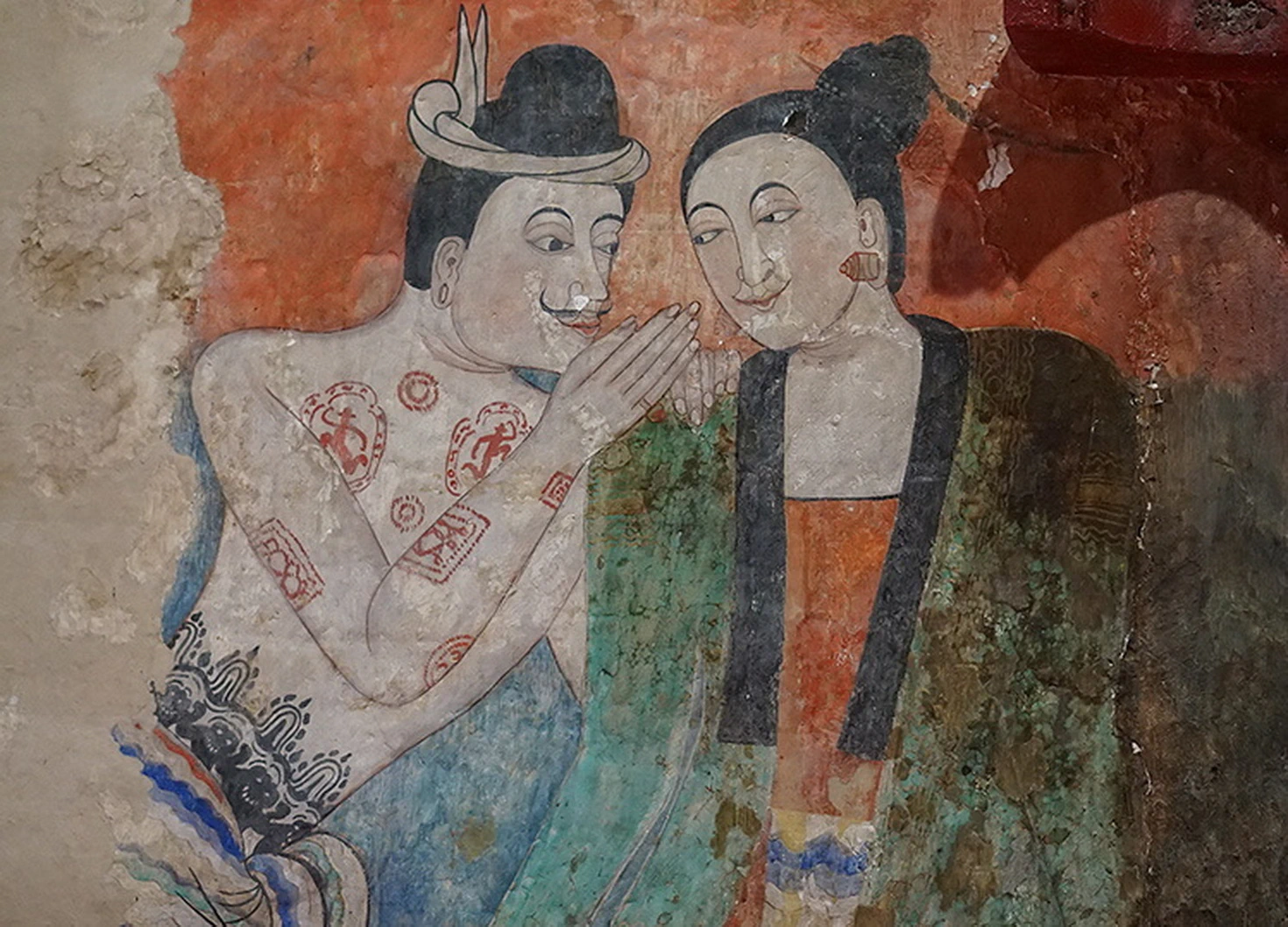
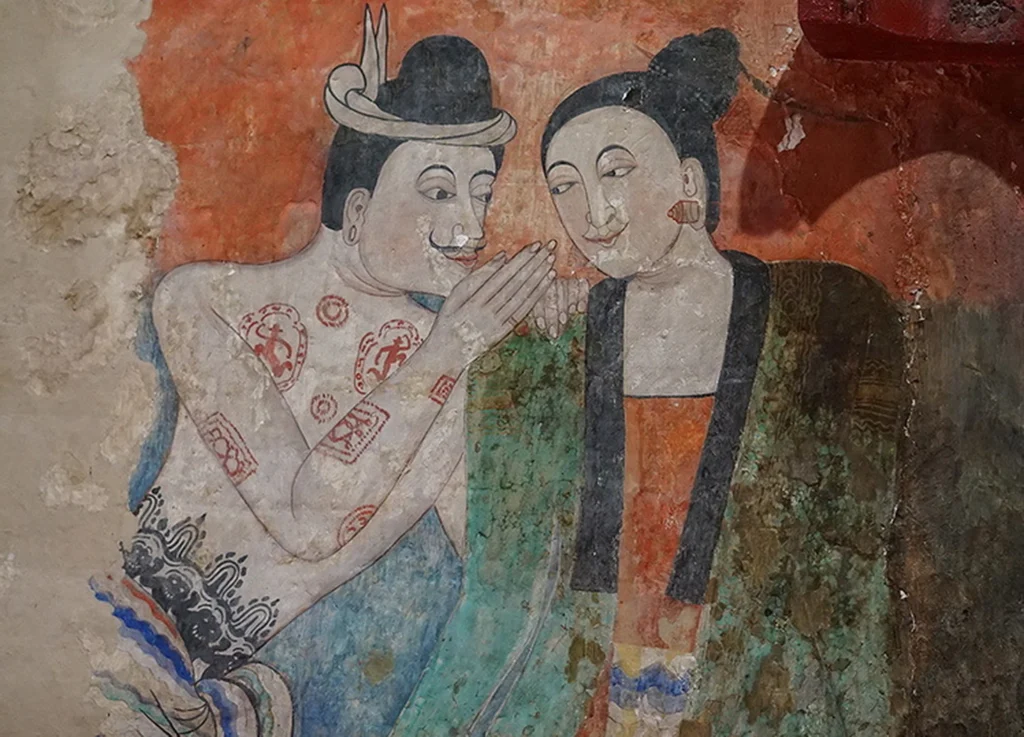
The “Pu Man Ya Man Love Mural” at Wat Phumin in Nan, Northern Thailand, is a celebrated piece of Thai arts. This iconic image, part of the temple’s extensive and fascinating murals, depicts a man and woman whispering intimately, symbolizing eternal love. Created by local Tai Lue artists in the late 19th century, this famous art in Thailand beautifully captures the essence of Northern Thailand folk art, showcasing traditional attire and customs. The mural has become a beloved symbol of Nan, drawing visitors to witness its delicate charm and the rich cultural narratives woven throughout Wat Phumin.
Northern Thailand Folk Art about Nan’s Whispering Love Mural Wat Phumin Nan Province, Thailand
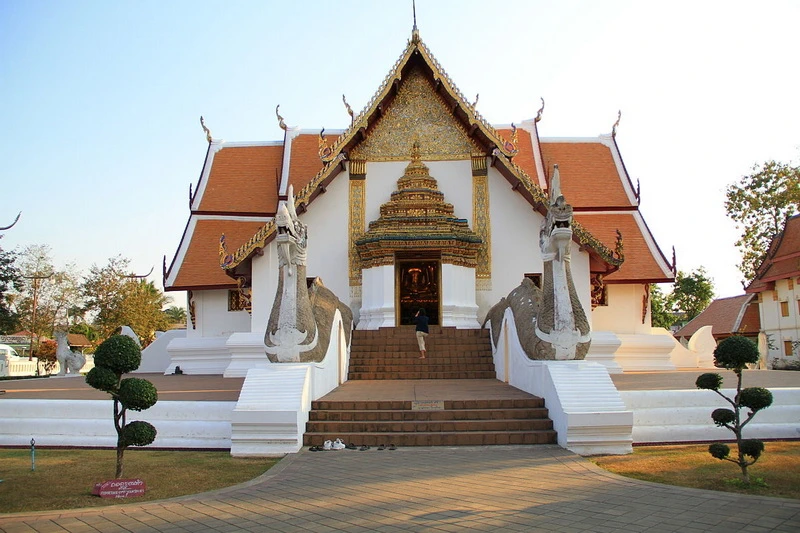
The renowned mural painting “Pu Man, Ya Man” graces the walls of Wat Phumin, a significant temple nestled in Nan province, northern Thailand. This captivating artwork is a prime example of Northern Thai folk art, reflecting the unique cultural tapestry and artistic traditions of the region. Northern Thai folk art often incorporates elements of daily life, local customs, and folklore, presented with a distinct charm and simplicity. The “Pu Man, Ya Man” mural beautifully encapsulates this, depicting a tender moment between a man and a woman in traditional attire, their expressions hinting at a private conversation or exchange of affection. The style often features bold lines, vibrant colors, and a narrative quality that offers glimpses into the historical context and social interactions of the time.
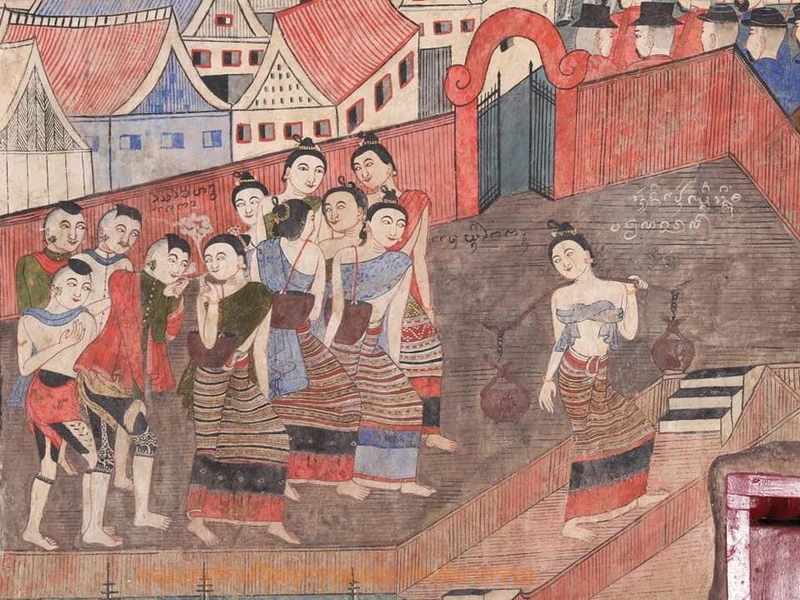
As a significant piece of Thailand art, the murals in Wat Phumin, including “Pu Man, Ya Man,” showcase the rich artistic heritage of the country. Thai arts encompass a diverse range of styles and mediums, often influenced by religious beliefs, historical events, and regional characteristics. The Nan school of mural painting, to which “Pu Man, Ya Man” belongs, exhibits distinct features that set it apart from central Thai styles. These include a more direct and less stylized representation of figures, a focus on local narratives alongside religious themes, and a color palette that often incorporates earthy tones and a unique use of perspective. The murals serve not only as decorative elements within the temple but also as valuable historical records, illustrating the clothing, hairstyles, and social customs of the late 19th century when they were created.
Within the broader context of Thai arts, “Pu Man, Ya Man” stands out as a particularly famous art piece in Thailand. Its endearing portrayal of human connection has resonated with viewers for generations, making it an iconic symbol of Nan province and a beloved image throughout the country. The mural’s popularity extends beyond its artistic merit; it has become a cultural touchstone, often reproduced on souvenirs and representing the romantic and gentle spirit of the northern Thai people. Its inclusion within the temple walls highlights the integral role of art in Thai religious and community life, where visual narratives serve to educate, inspire, and preserve cultural identity.
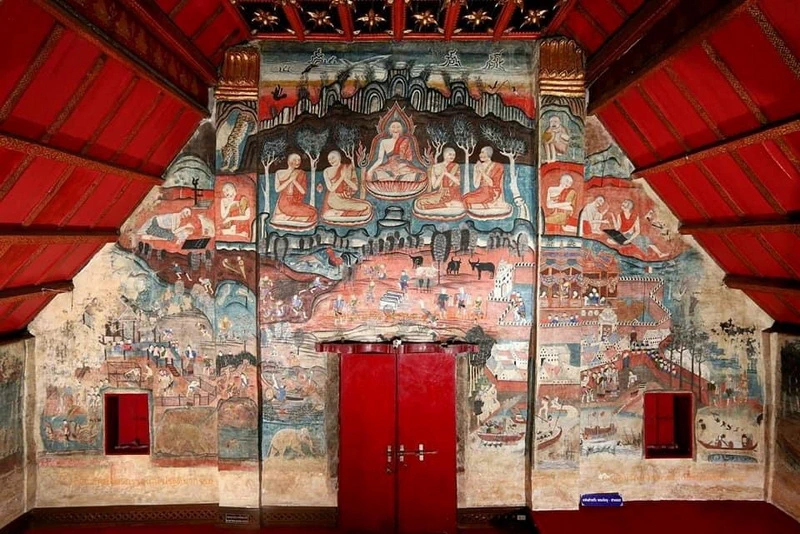
The enduring appeal of “Pu Man, Ya Man” lies in its ability to transcend time and cultural boundaries. It offers a poignant snapshot of a bygone era while simultaneously evoking universal emotions of love and intimacy. As a celebrated example of Northern Thailand folk art and a cherished piece of Thailand art, this famous mural in Thailand continues to captivate visitors to Wat Phumin, providing a window into the rich history, artistic skill, and cultural heart of Nan province. Its presence underscores the significance of preserving such artistic treasures, which serve as invaluable links to the past and vital expressions of Thai heritage.
Pu Man Ya Man Love Mural at Wat Phumin Details:
“Pu Man, Ya Man” refers to a famous mural painting located in Wat Phumin in Nan province, northern Thailand.
Here’s what makes it significant:
- The Subject: The painting depicts a young Tai Lue couple whispering to each other. “Pu Man” translates to “Grandpa Man” and “Ya Man” to “Grandma Woman,” but in this context, they represent a young man and woman.
- The Artist: The murals in Wat Phumin, including “Pu Man, Ya Man,” are attributed to Nan Bua Pin, a local Tai Lue artist, and were likely created during the temple’s major renovation between 1867 and 1874.
- “The World-Renowned Whisper of Love“: This particular mural is highly celebrated for its intricate and delicate portrayal of intimate affection, often dubbed “the world-renowned whisper of love.” It has become an iconic symbol of Wat Phumin and Nan province.
- Cultural Significance: The painting offers a glimpse into the traditional Tai Lue way of life and artistic style. It’s a cherished piece reflecting the local culture and history of the Nan people.
- Belief and Ritual: There’s a local belief that couples who visit Wat Phumin and whisper their love in front of the “Pu Man, Ya Man” painting will be blessed with eternal love. A ritual involves couples walking three times counterclockwise around the serpent gate before reciting a love poem in front of the mural.
So, when you hear “Pu Man, Ya Man Wat Phumin Nan District,” it almost certainly refers to this famous and beloved mural within Wat Phumin temple in Nan.
The Pu Man Ya Man Love Mural’s information for tourism
The Pu Man Ya Man Love Mural is not just a beautiful piece of art but also a cultural symbol that offers insights into the history and traditions of Nan. It’s a romantic and significant spot for tourists to experience. Sources
- Location: The mural is located inside the main assembly hall (ubosot/wihan) of Wat Phumin in Nan Province, Northern Thailand. Wat Phumin is next to the Nan National Museum.
- Must-See Attraction: The Pu Man Ya Man mural is considered a major highlight for anyone visiting Nan Province.
- “Whisper of Love” Ritual: There’s a local belief that couples who visit the mural and whisper their love to each other will be blessed with eternal love. Some also participate in a ritual of walking counterclockwise three times around the serpent gate in front of the Ubosot before visiting the mural.
- Photography: Tourists often take commemorative photos mimicking the whispering pose of Pu Man and Ya Man. Note that flash photography might be restricted inside the temple; it’s best to check the temple’s guidelines.
- Explore Wat Phumin: While visiting the mural, take time to appreciate the unique architecture of Wat Phumin, where the Ubosot and Viharn (assembly hall) are combined into a single cruciform structure. You can also see the four large Buddha statues facing the cardinal directions and other murals depicting Jataka tales and local life.
- Respectful Visit: As it is a sacred place, remember to dress respectfully (shoulders and knees covered) and maintain a quiet demeanor inside the temple.
- Nearby Attractions: Wat Phumin is located in the heart of Nan city, making it easy to visit other nearby attractions like the Nan National Museum and the walking street (held on weekends).
- Operating Hours: Wat Phumin is generally open daily from 6:00 AM to 6:00 PM.
- Entrance Fee: There might be a small entrance fee (e.g., 50 Baht for foreigners).
- Dress Code: As it is a sacred Buddhist temple, visitors are advised to dress appropriately (shoulders and knees covered).
- Accessibility: Nan Province is accessible by car, bus, or train (to Den Chai Station in Phrae, then a bus to Nan).
References and Images:
- Information: Website’s King Rama IX Commorative Library, Nakhon Ratchasima (https://www.finearts.go.th/)
- Image for this article: Website’s King Rama IX Commorative Library, Nakhon Ratchasima (https://www.finearts.go.th/)
- Image for this article: Website’s Wikipedia Thai (https://th.m.wikipedia.org/)