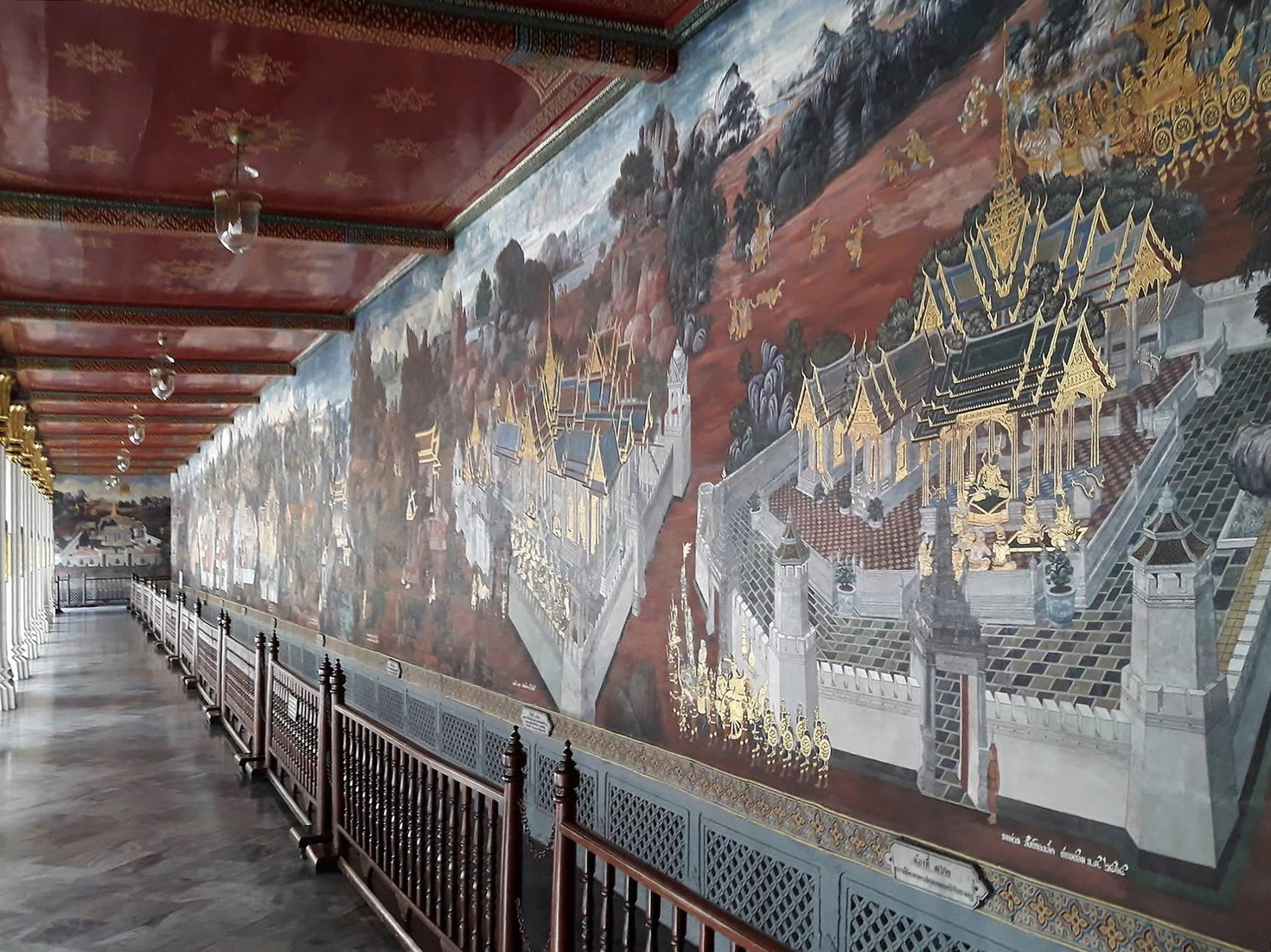
The Ramakien murals at Wat Phra Kaeo in Bangkok are a breathtaking masterpiece of royal Thailand art, illustrating the entire epic Ramayana. Painted along the temple’s outer walls, these vibrant and intricate scenes showcase the pinnacle of Thai arts, depicting gods, demons, and heroes in a uniquely stylized manner. Considered a famous art in Thailand, the murals offer a profound visual narrative of this cherished story, reflecting centuries of cultural and artistic heritage within the sacred grounds of the Temple of the Emerald Buddha.
Masterpieces of Thai Mural Painting: The Ramayana Story
The Ramakien murals adorning the walls of Wat Phra Kaeo in Bangkok stand as a breathtaking testament to the rich artistic heritage of Thailand. These vibrant and intricate paintings narrate the epic tale of the Ramakien, the Thai adaptation of the Indian Ramayana, a story deeply ingrained in the nation’s culture and identity. Stretching for nearly two kilometers along the temple’s outer walls, the 178 panels unfold the complete narrative, from the birth of Phra Rama to his triumphant return to Ayodhya, depicting battles, mythical creatures, and the moral struggle between good and evil.
These murals are not merely illustrations; they are a masterpiece of royal Thai art, reflecting centuries of artistic evolution and refinement. Painted in a distinctive Thai style, the figures are characterized by their graceful postures, elaborate costumes, and expressive gestures. The artists masterfully employ vibrant colors, often derived from natural pigments, and intricate gold leaf detailing to bring the epic to life. The landscapes and architectural elements within the paintings are also distinctly Thai, showcasing the kingdom’s unique flora, fauna, and architectural aesthetics. This meticulous attention to detail and the incorporation of Thai cultural elements elevate the Ramakien murals to a significant form of Thailand art.
The creation and preservation of these murals represent a remarkable feat of artistic collaboration and royal patronage. Commissioned during the reign of King Rama I in the late 18th century, as the temple itself was being constructed, the murals have been meticulously restored and maintained by subsequent generations of Thai artists. This ongoing dedication underscores the profound cultural significance of the Ramakien and the artistic legacy embodied within these paintings. They serve as a powerful visual representation of Thai arts, influencing various other artistic expressions, including Khon masked dance and Nang Yai shadow puppet theater, both of which draw heavily from the Ramakien narrative.
As one of the most famous art paintings in Thailand, the Ramakien murals at Wat Phra Kaeo offer an unparalleled opportunity to immerse oneself in Thai culture and artistry. The sheer scale and detail of the work are awe-inspiring, inviting viewers to explore the nuances of the epic story and the artistic techniques employed. Beyond their aesthetic beauty, the murals serve as an invaluable educational resource, preserving and transmitting the values, beliefs, and artistic traditions of royal Thailand art to both local and international audiences. They stand as a vibrant and enduring symbol of Thailand’s rich cultural heritage and the exceptional skill of its artisans.
The Ramakien murals of Wat Phra Kaeo in Bangkok Details:
The most significant and extensive Ramayana murals in Bangkok, Thailand, are located at Wat Phra Kaeo (the Temple of the Emerald Buddha), which is situated within the Grand Palace complex.
Here’s what makes these murals so noteworthy:
- Depiction of the Ramakien: The murals illustrate the entire story of the Ramakien, the Thai version of the Indian epic Ramayana.
- Extensive Artwork: There are 178 panels of these vibrant and detailed murals that run along the inner walls of the compound, creating a continuous narrative stretching over two kilometers.
- Historical Significance: The murals were first painted in 1783 during the reign of King Rama I, who also adapted and partly rewrote the Ramakien. They have been restored several times since then.
- Cultural Importance: The Ramakien is a cornerstone of Thai culture, influencing literature, art, and drama. The murals visually represent this epic tale of the battle between good and evil.
- Thai Context: While the main story aligns with the Ramayana, the murals depict characters, clothing, weapons, and landscapes in a distinctly Thai style.
When visiting the Grand Palace in Bangkok, the Ramakien murals at Wat Phra Kaeo are a major highlight and offer a fascinating glimpse into Thai art, culture, and storytelling.
Tourism Information:
The Ramakien murals at Wat Phra Kaew are not just beautiful works of art; they are a vital cultural treasure that offers a profound insight into Thai history, mythology, and artistic heritage. A visit to witness these magnificent paintings is an essential part of any tourist experience in Bangkok.
- Location: Wat Phra Kaew (Temple of the Emerald Buddha), Grand Palace, Bangkok.
- Accessibility: The Grand Palace is a major tourist attraction in Bangkok and is easily accessible by taxi, tuk-tuk, or public transport (though be prepared for crowds).
- Viewing the Murals: The murals line the covered walkways (Phra Rabiang) surrounding the temple complex. Visitors can walk along these corridors to view the paintings. It’s recommended to allow ample time to appreciate the detail.
- Guided Tours: Hiring a local guide can greatly enhance the experience, as they can explain the intricate details of the Ramakien story and point out significant scenes in the murals. Audio guides are also available.
- Dress Code: As Wat Phra Kaew is a sacred site, a strict dress code is enforced. Shoulders and knees must be covered.
- Photography: Photography is generally allowed in the mural areas, but it’s always best to check for any specific restrictions on-site.
- Related Attractions: To further appreciate the Ramakien, consider attending a Khon masked dance performance, a traditional Thai art form based on the epic, often performed at venues like the Sala Chalermkrung Royal Theatre in Bangkok. You might also see Nang Yai shadow puppet plays, another art form derived from the Ramakien.
References and Images:
- Information: Website…… (domain.com)
- Image for this article: Unsplash website (unsplash.com)